


Useful Tips to Make The Most Of Your Abs Workout
Looking healthy and fit is undoubtedly one of everyone’s goals, regardless of gender. However, to become physically fit, it may be necessary to go beyond challenging workout routines and also make adjustments to one’s diet, sleep patterns, and overall lifestyle. With this article, you will gain knowledge in a variety of areas, from following a sample workout program to determining nutritional standards, and thus experience a more effective process of developing abs!


İÇİNDEKİLER
How Does the Abs Building Process Work?
From those who train in the gym under the guidance of professional trainers to the sedentary individual aiming to exercise according to their own standards in a home environment, the first question that comes to everyone’s mind is “How to build abs?”. Naturally, this seemingly simple question has more complex answer. When designing the process of how to build or develop abs, it is crucial for each individual to accurately assess their own limits and seek support from professionals when needed. Let’s take a look at the steps involved in developing abs together.
The abdominal, also known as the core area, consists of the transverse abdominis, rectus abdominis, and internal oblique muscle groups, which strengthen the body’s overall endurance threshold. When these muscles in the core area start to strengthen through contractions, the muscle fibers separate into groups, resulting in the aesthetic appearance desired by each athlete. The most important detail to know about the process of developing abs is that the abdominal muscles require a specifically planned workout routine within the existing training routine. In other words, to build abs, it is necessary to implement a specific training program focused on exercises for the arms, shoulders, back, or legs.

Apart from anatomical and muscular predisposition, it is crucial to follow a goal-oriented diet to make the existing abs more defined before delving into the process of structuring them, which often becomes noticeable after prolonged training sessions. After considering this detail, you can begin the training process with beginner-level exercises. To achieve symmetrical and well-developed abs like fitness models, it is essential to perform exercises such as crunches, planks, side planks, or side turns with as many repetitions as possible. However, it is equally important to perform the exercises with correct biomechanical form, not just focusing on the frequency of execution.
The development of abs occurs through a combination of complex training and exercises. Simply performing forward and backward movements with the body does not fully engage all the muscle groups in the abdomen. To effectively work the upper, lower, side, and middle sections of the abs, it is necessary to implement a specific training method where each part contracts and relaxes separately, incorporating different exercise equipment. Without following this specific training method known as “Total Core,” you may end up with abs that look more like they were supplemented with exercises done in your spare time rather than a well-trained set of abs.
How to Build Abs at Home?
The development of muscles is achieved based on the principle of resistance to force. Therefore, abs can be easily developed in a home environment without the need for any weight stations or free weight plates if the correct training methods are applied. If you have such a plan, your first step should be to make small adjustments to both enhance your motivation and create a suitable training environment at home. After these arrangements, using a mat or floor cushion, you can target your desired abs and achieve results within a short period of time, according to your workout pace.

You have organized your home environment, obtained a mat or cushion, and you are ready to start your abs exercises, but suddenly you have question marks about where to begin. To help dispel these uncertainties, always keep the concept of the “Principle of Small Steps” in mind. If possible, gradually progress your training process from easy to more challenging, seeking support from an expert if possible. Even if you have a sporty lifestyle, especially when performing exercises at home, start with active warm-up movements such as Jumping Jacks or Skipping, and don’t forget to follow it with a stretching routine. This way, you prepare both your body and mind for the exercises you will perform.
After performing the active warm-up and stretching movements, you can now proceed to the implementation of the “Basic Training,” which focuses on developing abs. By incorporating the “Principle of Small Steps” into the actual training part, you can use all the planned exercises throughout the training session to warm up the abdomen. During the warm-up, it is important to perform each movement with fewer repetitions and maintain proper body form according to the movement flow, as these conditions contribute to warming up the abs. After completing the 3-4 minute active localized warm-up that meets these conditions, you can comfortably proceed to the core exercises.
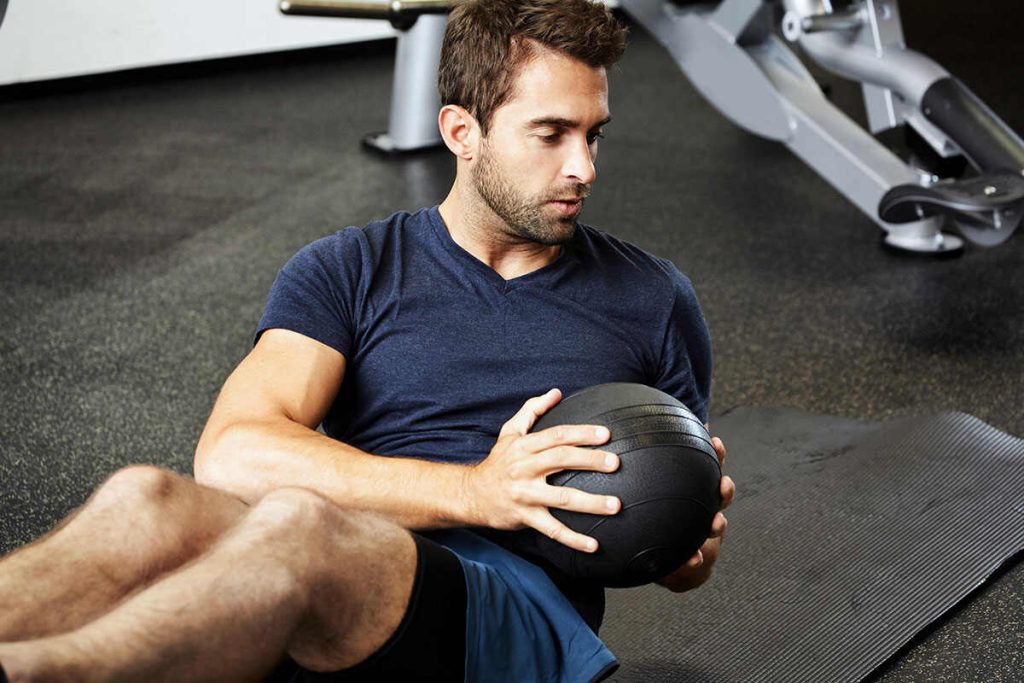
The advantage of working on the abs at home is that you can train them using only your body weight, without the need for any fitness equipment. Movements such as the plank, crunches, leg raises, flutter kicks, mountain climbers, and partial sit-ups, where the weight center is close to the ground, can be easily performed in a home environment. During these exercises, you can utilize equipment like resistance bands or medicine balls to change the range of motion or increase the force applied to the body. Remember, achieving well-defined abs requires occasionally engaging in exercises that may cause discomfort.
Tips for Building Abs
For an effective abs development process, another important aspect to consider is what to pay attention to before, during, and after the training session. Especially for individuals who have not previously experienced professional training, focusing on this aspect can help them complete the development process with minimum damage and maximum benefits. Otherwise, there is an increased risk of encountering factors that negatively affect both physical and mental performance, such as body and joint pain or excessive stress.

In the first stage of the abs development process, you need to assess your current physical condition. In this regard, it is best to consult a medical professional to see if you have any health problems, especially related to your waist and spinal area. After the consultation, based on your current physical condition, you can perform training exercises specifically designed for the abs, prepared by experts in the field. During the training process, it is important not to neglect the rest periods your body needs between sets[2].
Indeed, the nature of the surface where abdominal exercises are performed plays a crucial role in the effectiveness of the movements. In exercises such as sit-ups or leg raises, where a significant portion of the body is in contact with the ground, it is important for the floor to be flat and stable, without compromising the movement’s range of motion. For example, performing sit-ups on a soft mat can cause the surface to flex with each move, significantly reducing the exercise’s efficiency. In addition to these details, the key requirement for achieving abdominal muscle development is to follow a properly designed and comprehensive training program.
Proper Nutrition for Effective Results
To make the naturally existing abs more defined, it is important to reduce the fat around the waist and bring the muscle groups as close to the surface of the skin as possible. Therefore, in addition to performing exercises to burn belly fat, paying attention to nutrition can help achieve more successful results in developing abs. In the process of abs development, it is advisable to choose a nutrition style that keeps the waist area within the appropriate range and is rich in protein.

When you want to create a healthy, nutritious, and effective diet plan, it is important to choose foods that are high in protein and low in carbohydrates. Therefore, foods with high protein content, such as eggs, red or white meat, as well as oats, greens, and nuts that contain healthy fats in moderation, can be preferred with peace of mind. Remember that if you are unable to provide proper and effective nutrition, which is a requirement for having a fit body, you will continue to sail against the wind[1].
Most Effective Abs Exercises
The abdominal muscles, which have an extremely complex structure, develop through different methods and training. Therefore, abdominal exercises performed with different equipment need to be evaluated separately from exercises performed using only body weight. Additionally, like exercises that target other muscle groups in the body, exercises for the abs also effectively engage not only the targeted muscle group but also the auxiliary muscle groups.

You may attain impressive abs by performing the abdominal exercises listed below at home, outdoors, or in the gym. Keeping in mind the individual needs and differences, it is important to consider during the implementation of abdominal exercises, you can experience the 10-item exercise list as a sample application:
- Abdominal Crunch
- Legs Up Crunch
- Vertical Leg Crunch
- Lying Knee Sit Up Crunch
- Lying Legs Up
- Seated Knee Up
- Seated Legs Up
- Side Crunch
- Plank
- Side Plank


Highlights

Incorporating sports into your daily life is as important for achieving a fit appearance as it is for promoting a healthy and long life. If you want to balance your calorie intake, burn fat, and maintain muscle density, you can try cardio exercises such as running, swimming, and cycling. However, if your goal is to shape your body and achieve …

Are you looking for a comprehensive guide on the advantages of using coconut oil? Then stay tuned for the top benefits of utilizing coconut oil! If you love cooking, you may have heard about coconut oil which is prominent for good reasons. It provides many well-being advantages. Not only health benefits, but coconut oil has a delicate taste and is …

Building and repairing tissues, boosting immune system performance, and preserving general health depend on protein, a macronutrient. Although it may be found in entire meals, including meat, fish, dairy, legumes, and nuts, consumers often use protein powder as a quick and practical way to fulfill their protein needs. This blog post outlines the ins and outs of protein powder.